The Science
Behind BE LIGHT.
BE LIGHT regulates the nervous system on multiple levels simultaneously — brainwaves, autonomic nervous system, breathing, and light. Scientific foundation: Brainwave Entrainment, documented since the 1940s. No esoterics. Peer-reviewed science.
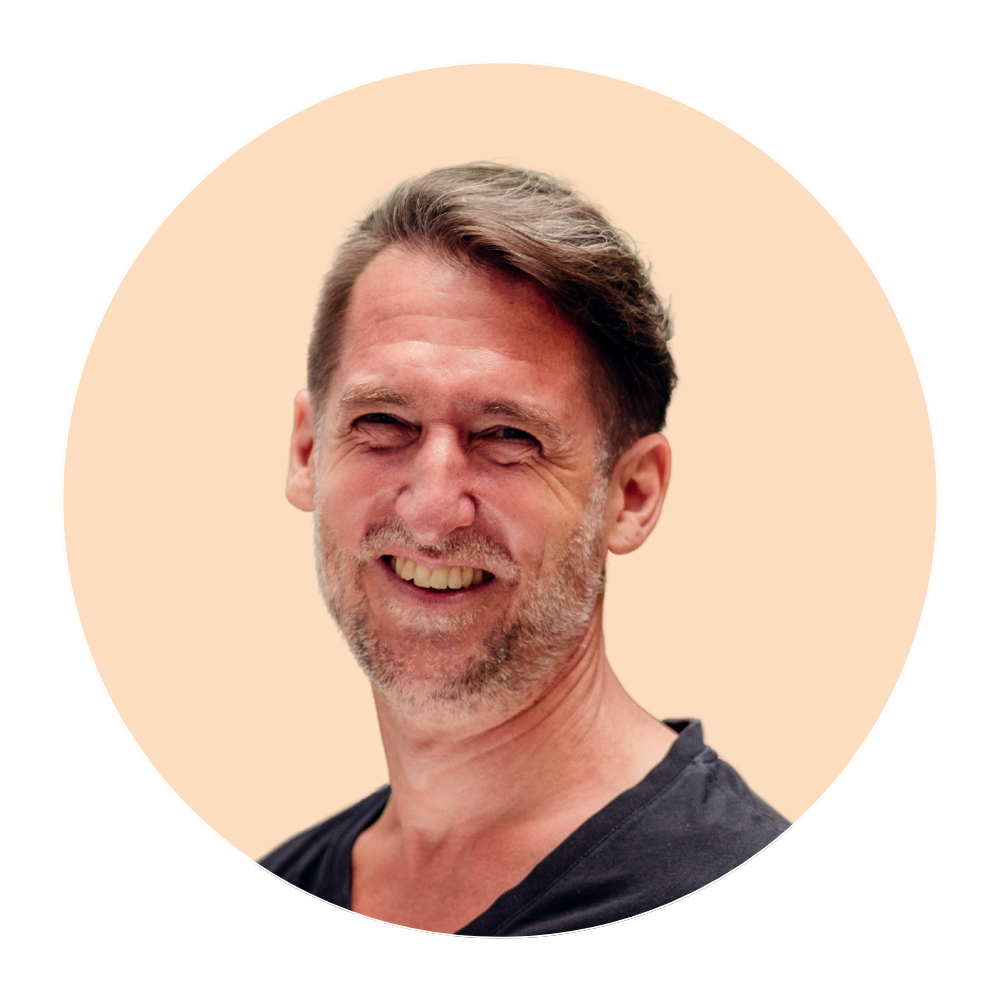
Reviewed by Ivo Vossen — Founder & Audio Engineer (30 years), researching neuro-audio & brainwave entrainment.
BE LIGHT Works on the Entire Nervous System
Four levels of effect — active simultaneously in every 8-minute session.
Neural Level
Brainwaves synchronize with the target frequency (Frequency Following Response). Brainwave Entrainment is the core — peer-reviewed since the 1940s.
Autonomic Level
The autonomic nervous system shifts from sympathetic (stress) to parasympathetic (recovery). HRV rises, heart rate and blood pressure drop measurably.
Physiological Level
Cortisol drops, breathing slows. The visual light pulses additionally reinforce the rhythmic synchronization of brainwaves via the visual pathway.
Emotional Level
Sound, frequencies, and spoken guidance activate emotional processing centres in the brain. Mood regulation, a sense of safety, and inner calm arise directly — without cognitive effort.
What is Brainwave Entrainment?
Brainwave Entrainment describes the brain's ability to adjust its electrical activity to an external rhythmic stimulus. When you hear a rhythmic tone or see a pulsing light, neurons in the brain begin to synchronize with that frequency.
This phenomenon is called the Frequency Following Response (FFR). As early as 1934, Adrian & Matthews observed that the brain responds to rhythmic light flicker — the first documentation of a photic EEG response. The principle has been studied extensively since; effects on stress, focus, and well-being are supported by multiple studies, while the precise neural mechanism continues to be actively investigated.
1934
Adrian & Matthews first observe that the brain responds to rhythmic light flicker — the first documentation of a photic EEG response.
1973
Gerald Oster publishes the groundbreaking study on binaural beats — the foundation for auditory Brainwave Entrainment.
Today
Multiple studies show consistent effects on stress, focus, and sleep. The precise neural mechanism remains an active research question — which makes the science more credible, not less.
How BE LIGHT Works
Stimulus
Specially composed sound frequencies + visual light pulses send rhythmic signals to the brain.
Synchronization
Brainwaves synchronize with the target frequency (Frequency Following Response).
State Change
The nervous system shifts to the desired state: relaxation, focus, sleep, or flow.
The BE LIGHT Formula
Four science-backed components — synchronized in one 8-minute session.
Breathwork
Targeted breathing patterns activate the parasympathetic nervous system and lower cortisol within minutes. Box breathing and 4-7-8 techniques form the foundation of every session.
Audiovisual Stimulation
Binaural beats and isochronic tones combined with pulsed light frequencies synchronize brainwaves to the target frequency — the core of Brainwave Entrainment.
Huang & Charyton (2008), Alt. Therapies in Health & Medicine
Guided Meditation
Voice guidance directs attention and deepens neural synchronization. Combined with AVS, meditation becomes immediately effective — even for complete beginners.
Visualization
Inner imagery deepens the relaxation state and activates the same neural networks as real experiences — a principle used in elite sports performance.
Each component works on its own. Together, they are measurably more effective.
The results are measurable.
BE LIGHT doesn't just feel good — the effects are visible in biomarkers. Participants show significant changes in HRV, stress levels, and subjective well-being after a single 8-minute session.
Heart Rate Variability — gold standard for stress resilience
Short enough for the workday, long enough for measurable impact
No training needed — the effect begins from session one
The 5 Brainwave Bands
Every mental state correlates with a specific brainwave frequency. BE LIGHT targets these natural frequency bands.
Measurable Responses in the Body
Beyond brainwaves, biomarkers show the systemic effect — BE LIGHT regulates the whole body, not just the brain.
Gold standard for stress resilience — measurably increases after a single session.
Primary stress hormone measurably decreases with regular use.
Both drop measurably — a sign of parasympathetic activation.
The autonomic nervous system shifts from stress to recovery mode.
Selected Research
A selection of relevant peer-reviewed studies on Brainwave Entrainment and audiovisual stimulation.
Stress & Anxiety Reduction
Chaieb et al. (2015): "Auditory beat stimulation and its effects on cognition and mood states." Frontiers in Psychiatry. — Review of auditory beat stimulation; points to effects on anxiety and mood, with a still-mixed evidence base.
Focus & Cognitive Performance
Garcia-Argibay et al. (2019): "Efficacy of binaural auditory beats in cognition, anxiety, and pain perception: a meta-analysis." Psychological Research. — Meta-analysis (22 studies) with a significant medium effect on cognition, anxiety, and pain perception.
Sleep Quality
Abeln et al. (2014): "Brainwave entrainment for better sleep and post-sleep state of young elite soccer players." European Journal of Sport Science. — Pilot study: improved subjective sleep quality and recovery in elite athletes.
Audiovisual Stimulation
Huang & Charyton (2008): "A comprehensive review of the psychological effects of brainwave entrainment." Alternative Therapies in Health and Medicine. — Comprehensive review of the psychological effects of audiovisual stimulation.
Meditation & Neuroplasticity
Puhlmann et al. (2021): "Contemplative mental training reduces hair glucocorticoid levels in a randomized clinical trial." Psychosomatic Medicine (MPI Leipzig). — Several months of meditation/mental training measurably reduces long-term cortisol in hair.
FFR & Entrainment Mechanism
Coffey et al. (2021): "Oscillatory entrainment of the frequency-following response in auditory cortical and subcortical structures." Journal of Neuroscience. — MEG/EEG evidence that the Frequency Following Response has an oscillatory entrainment component at cortical and subcortical levels.
ANS Regulation via Sound
Yang et al. (2025): "Effects of binaural beat therapy with different frequencies on autonomic nervous system regulation." BMC Complementary Medicine and Therapies. — Binaural beats measurably reduce heart rate and blood pressure, modulating the sympathetic/parasympathetic balance.
Audiovisual Stimulation — Controlled Trial
McPherson et al. (2024): "Lightening the mind." Scientific Reports (Nature). — Double-blind randomized controlled trial (N=262): audiovisual stimulation significantly improved mood and stress-related cognition, comparable to breath-based meditation. One of the largest clean AVS studies to date.
Research at the Frontier
Audiovisual stimulation is an active, growing field of research. These developments (2024–2025) shape the science BE LIGHT contributes to.
Sensory 40 Hz Stimulation
Leading institutions such as MIT are studying how synchronized 40 Hz stimulation via light and sound drives gamma brainwaves. Mechanistic studies show that rhythmic activity can be entrained even into deep brain regions.
Controlled Efficacy Studies
A double-blind randomized trial with 262 participants (McPherson et al. 2024, Scientific Reports) showed: audiovisual stimulation significantly improves mood and stress-related cognition — comparable to breath-based meditation.
Closed-Loop & Biomarkers
The next generation adapts stimulation to the nervous system in real time. BE LIGHT is researching this closed-loop approach together with HAW Hamburg — measured via established biomarkers such as heart rate variability (HRV).
BE LIGHT combines this research with its own exploratory EEG measurements (N≈40) and communicates the state of evidence transparently — not a medical device, no healing claims.
Research Partners
BE LIGHT collaborates with leading scientists and institutions.
Prof. Dr. Anne Schwerk
Professor of AI & Neuroscientist. Supports the scientific validation of BE LIGHT.
Dr. Paul Hammer
Ph.D. Systems Biology & Bioinformatics. Drives data-driven analysis of biomarker effects.
Prof. Dr. Alexander Frenkel
HAW Hamburg. Joint work with BE LIGHT on evolving the system into closed-loop neurofeedback — real-time adaptive control of mental states.
What experts say
BE LIGHT keeps the brain vital and the mind calm. Research with users shows: brainwave stimulation works quickly and across a broad spectrum of individuals — with positive impacts on both physical and mental well-being.

BE LIGHT delivered measurable impact at ecovium. −30% stress levels, +23% satisfaction — in just 6 months.
BE LIGHT helped me deal with stress and sleep. I'm using the app regularly — for me it works better than anything else.

Science FAQ
Brainwave Entrainment is a neuroscience principle where external rhythmic stimuli (tones, light pulses) synchronize brainwaves to a specific target frequency. This phenomenon is called the Frequency Following Response (FFR).
The first observations that the brain responds to rhythmic light flicker go back to Adrian & Matthews (1934); the principle has been studied extensively since. The effects on stress, anxiety, and focus are supported by controlled studies and meta-analyses — including a double-blind RCT with 262 participants (McPherson et al. 2024). How exactly brainwaves respond to external frequencies is an active area of research — a sign that science takes this seriously, not that it rejects it.
Honestly assessed: the mechanism — that brainwaves adjust to external frequencies — is well documented (Coffey et al. 2021). Acute effects on mood, stress, and anxiety have been shown in controlled studies, including a double-blind RCT with 262 participants (McPherson et al. 2024) and meta-analyses on binaural beats (Garcia-Argibay et al. 2019). Effect sizes are moderate, and the evidence base varies by application. Sensory 40 Hz stimulation is currently being studied intensively at leading institutions such as MIT. BE LIGHT is not a medical device and makes no healing claims — we communicate the state of research transparently.
Audiovisual stimulation combines sound frequencies (binaural, isochronic tones) with visual light pulses. Both signals synchronize brainwaves to a target frequency — e.g., Alpha (8–12 Hz) for relaxation or Beta (13–30 Hz) for focus.
Binaural beats arise when each ear is presented with a slightly different frequency — the brain perceives the difference as a rhythmic beat (requires headphones). Isochronic tones are single tones that pulse on and off in a fixed rhythm; they also work through speakers. BE LIGHT combines both techniques with synchronized light pulses to guide brainwaves toward the target frequency.
Yes, intensively. Sensory 40 Hz stimulation is being studied at institutions such as MIT, and controlled studies like McPherson et al. (2024) confirm effects on mood and stress. BE LIGHT is researching adaptive closed-loop stimulation together with HAW Hamburg, adjusting the frequencies to the nervous system in real time. The fact that the field is growing is a sign of scientific relevance.
Yes. Audiovisual neurostimulation has been documented for 80+ years and is considered safe. If you have an existing neurological condition (e.g., epilepsy), we recommend consulting a physician first. BE LIGHT is not a medical device.
Meditation apps require practice, concentration, and discipline. BE LIGHT is based on a passive, neurological mechanism — the frequencies work directly without you having to do anything. No training, no experience needed.
BE LIGHT Insights
Neuroscience for your everyday life — once a month, no spam.
Convinced by the science?
Experience the effect yourself — in a free demo or directly in the app.
No commitment · 20 minutes · Science-backed