The Sleep Crisis
Sleep problems are one of the most common health complaints worldwide. According to the DAK Health Report, 80% of workers in Germany experience sleep issues. The consequences: reduced concentration, weakened immune system, increased burnout risk.
The core problem: The brain can’t switch off in the evening. It stays in beta mode (13–30 Hz) — the activity mode — instead of shifting into the slower frequency ranges needed for falling asleep and deep sleep.
The Role of Delta Waves
Delta waves (0.5–4 Hz) are the slowest brainwaves and dominate during deep sleep. In this phase:
- Cell renewal and repair of the body
- Growth hormone is released — crucial for recovery
- Memory consolidation — the brain processes the day
- Immune system is strengthened
Without enough delta sleep, the body misses its deepest recovery phase. You wake up but don’t feel rested.
How BE LIGHT Helps You Fall Asleep
BE LIGHT sleep sessions use a progressive frequency descent:
- Start in the alpha range (10 Hz): Calming the active mind
- Transition to theta (6 Hz): The state between waking and sleeping
- Target: Delta (2–3 Hz): Deep relaxation, sleep readiness
The sound frequencies and light pulses guide the brain step by step through this natural transition — just faster and more reliably than without support.
What the Research Shows
The study by Abeln et al. (2014) examined the effect of brainwave entrainment on sleep quality in young competitive athletes. The results: improved sleep quality and better recovery after waking.
Further studies confirm:
- Binaural beats in the delta range extend the deep sleep phase
- Audiovisual stimulation before sleep reduces the time to fall asleep
- Regular use improves subjective sleep quality over weeks
Practical Tip
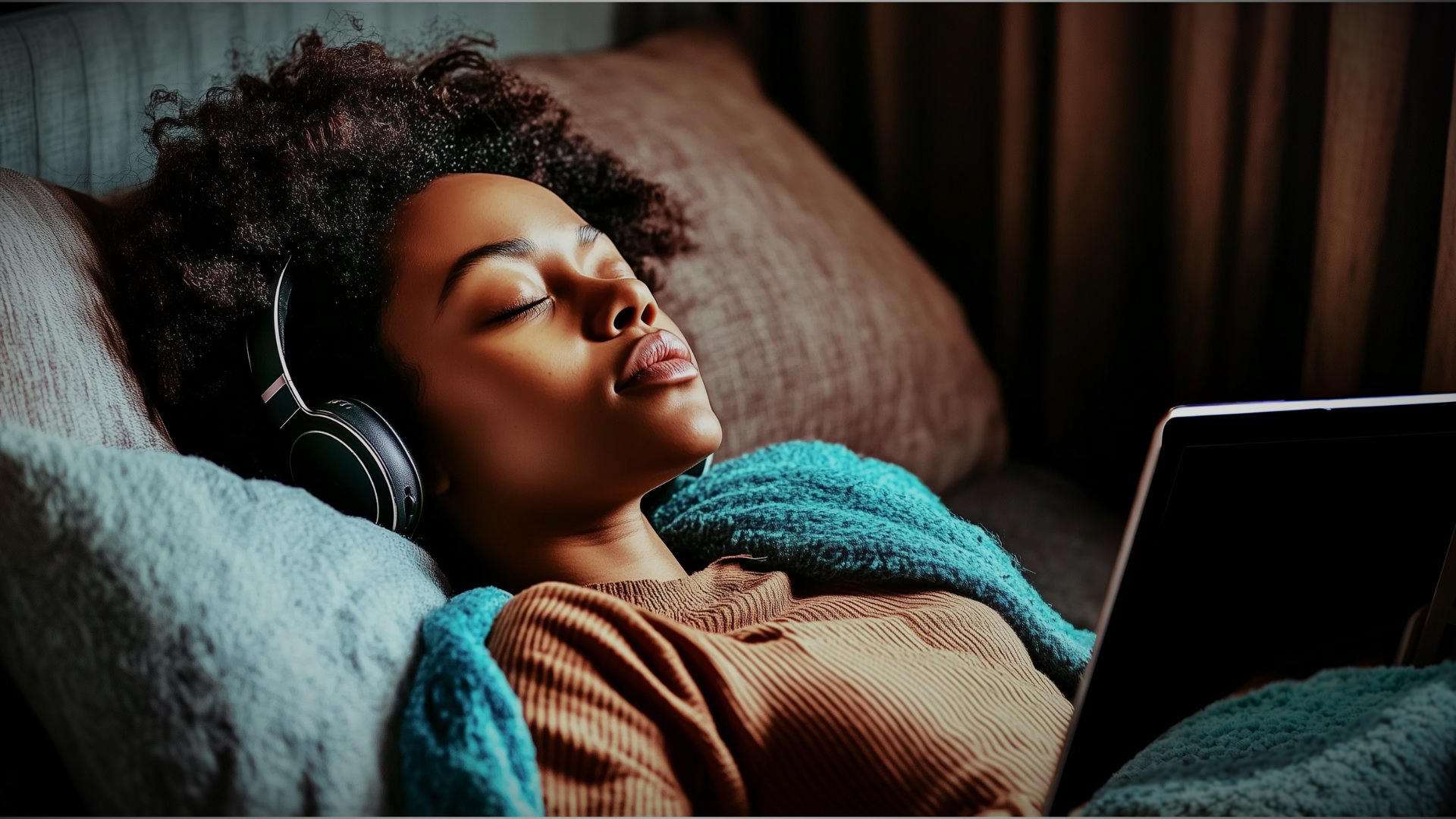
Use the BE LIGHT sleep session 15–20 minutes before going to bed. Headphones on, display brightness low, close your eyes. The session ends automatically — many users fall asleep during the session itself.
Conclusion
Delta waves are the key to restorative deep sleep. BE LIGHT uses audiovisual stimulation to gently guide the brain into this state — faster and more reliably than counting sheep, breathing exercises, or sleep apps that only play sounds.